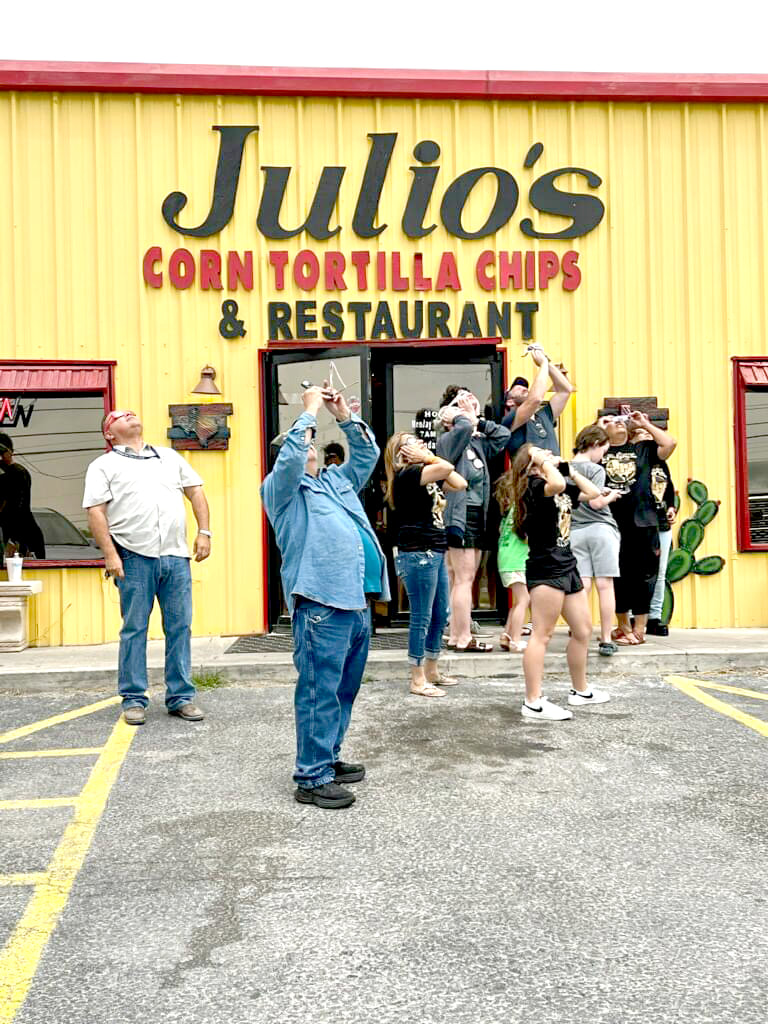
They are large geometric patterns appearing in fields of corn, wheat, and barley. The patterns are created when certain areas are flattened while other areas are left untouched. Some people believe that they are messages from intelligent extraterrestrial life. Others say they are made by humans. Is there any benefit to the study of crop circles? The first known reported crop circle occurred in 1678 England. It was known as the “Mowing Devil” and depicted a devilish figure cutting a circle in a field. Crop circles not only in England, but other parts of the world including, the United States, Canada, Australia, Japan and India. The modern crop circle phenomena did not begin until the 1960’s and 1970’s. It was during this period in the late 1970’s when two men, Doug Bower and Dave Chorley, began claiming responsibility for the crop circle development in the English countryside. They claimed that by using simple geometry, a wooden plank, and some rope, the design of the crop circle could be accomplished in a matter of hours at night, thus leading to the overnight development of the circle without knowledge to the landowner and miraculously appearing. Many people believe that this claim ended the mystery of the crop circle and its origins. Researchers, on the other hand, say otherwise. Researchers examine the location and weather patterns of the area. They also scrutinize the affected crops and surrounding soil with sophisticated techniques such as x-ray diffraction analysis. Electromagnetic energy readings are also taken inside and near the crop circle along with analyzing the pattern circle, e.g, comparing some complex patterns with hieroglyphics or other ancient symbols. After all the testing and data analysis, researchers, having pondered the question of crop circles for decades, still haven’t come up with an explanation as to why they exist. There are other theories as to how crop circles are made. Some suggest that it is nothing more than swirling winds called vortices. These are similar to “dust devils”. The spinning columns force a burst of air down to the ground, which flatten wheat and other crops. Vortices are common in hilly areas of southern England. Dr. Terence Meaden of the Tornado and Storm Research Organization in Wiltshire, England, says the vortices that create crop circles are charged with energy (his idea is called the Plasma Vortex Theory). When dust particles get caught up in the spinning, charged air, they can appear to glow, which may explain the UFO-like glowing lights many witnesses have seen near crop circles. But the question remains: How can a few seconds worth of spinning air create such intricate and perfectly defined crop circles? A few researchers have theorized that small airplanes or helicopters stir up downdrafts that push the crops down into patterns. Recreation attempts so far have not been successful in producing the downdrafts necessary to make the perfectly round edges seen in most crop circles. Some researchers believe that the Earth, in fact, creates its own energy, which forms the circles. One possible form of Earth energy is electromagnetic radiation. Scientists have, in fact, measured strong magnetic fields inside crop circles, and visitors have sometimes reported feeling a tingling sensation in their bodies while or near the circles. In the early 1990s, American biophysicist Dr. William Levengood discovered that crops in circles were damaged much in the same way plants are heated in a microwave oven. He proposed the idea that the crops were being rapidly heated from the inside by some kind of microwave energy, thus explaining certain joints in the crop having an explosion-like appearance at the bend. Possibly the most controversial theory is that crop circles are the work of visitors from other planets- sort of like alien calling cards. People who agree with this theory say that the circles are either the imprint left by UFO landings or messages brought to us from afar. Some eyewitnesses claim to have seen flying saucer-like lights and strange noises emanating from the crop circle sites. The crop circle phenomena is still open for debate. Will we ever find out the reason for their existence or will we lay dormant like the broken crop? Is it just another tourist money grab? Will we ever have an answer? #QUESTIONEVERYTHING I too, like many of you am a fan of some Mediterranean Foods. Not long ago I came across one dish that has been become one of my favorites now and so easy and quick to make. I'm talking about Mediterranean Style Beets Hummus. WAIT. I know you're probably thinking Beets? Yes Beets. They have never been one of my favorite foods either but when you roast them and combine them with a few other, easy to find, choice ingredients, WOW, Yummy. So here is the recipe. 3 Medium Beets (roasted) 3 Table Spoons of Extra Virgin Olive Oil Sea Salt and Black Pepper to Taste 1 ½ Cooked Chick Peas (drained) 1 Peeled Garlic Clove 1 Tablespoon of Tahini 1 Splash of Seasoned Rice Vinegar Combine All ingredients in a blender and blend to constancy. Pour out and spread on a plat plate. Top with sesame seeds and Viola. Now you have some of the best Mediterranean Beet Humus comparable to the one served in most High End Mediterranean Restaurants everywhere. Even if you, like me, are not a huge Beet fan you should cook this easy recipe up and give it a go. Who knows, like me, you may find you end up starting to like this healthy and wholesome beet recipe. What else could you want, It uses a few ready available ingredients many of us have in our kitchens already and only takes a few minutes to throw together. Put it on some Tortilla Chips, some crackers or just sop it up with some great bread or even some Nan. Have a great summer and always try to stay cool and hydrated. See you next time for another great recipe for Happy Healthy Eating. Lo que empezó como una venta desde una cocina de una casa particular, por parte de la familia García, ahora se ha convertido en una de la empresa de Julio’s Corn Tortilla Chips, que ha puesto el nombre de esta Frontera en alto al estar en venta en más de tres mil centros comerciales en 42 estados de este país. Julio’s Corn Tortilla Chips, empezó en los años 70’s en la cocina de Julio y Lilia García, se convirtió en uno de los productos favoritos de esta Frontera, para después convertirse en los favoritos en todo el estado, y de ahí a nivel nacional, actualmente Miguel Garcia es quien está al frente de la empresa y quien sigue con el legado de sus padres para llevar este producto a todo el país, y si se puede también a otros países. Miguel García, ya conocer que para poder abastecer la demanda de estos Chips a la comunidad, abrieron lo que hoy es el restaurante Julio mismo establecimiento en donde todo se hacía a mano para hacer estos famosos Chips para la población. La demanda por estos Chips fue creciendo y creciendo al punto en que no daban abasto, por lo que Miguel garcia hizo la inversión y en el 2001 compró su primer máquina que le ayudaría a producir este producto en mayor cantidad y menor tiempo. Esta unidad era para 500 libras por hora, la cual estuvo utilizando durante 14 años, hasta que nuevamente aumentó la demanda de este producto. Fue en el 2014, cuando miguel García realizó un convenio con el centro comercial Walmart para introducir este producto en este comercio, pero el único requisito era incrementar la cantidad de productos por lo que se tuvo que hacer la inversión para adquirir una segunda máquina, pero ahora de 1600 libras Por hora, por lo que ahora el producto que hacía durante una hora con esta nueva unidad lo terminaban en 15 minutos. Gracias a esta inversión, los jos Chips pueden ser encontrados en más de 2000 centros comerciales en todo el estado de Texas, y en más de 3000 comercios en 42 diferentes estados de este país. Después de 10 años, Miguel garcia realizó otra inversión de una nueva máquina de 2500 libras por hora, la cual actualmente se instaló y se están ultimando. Los detalles se está trabajando en el área electrónica para empezar a hacer las pruebas antes de empezar a usarla. Se cuenta con un personal de 80 personas en esta empresa y aún así Miguel Garcia sigue atendiendo a la comunidad personalmente, ya que uno de sus reglas es atender a la población, lo mejor que se pueda, como lo hacían sus padres y así seguir siendo uno de los restaurantes Favoritos, y también que su producto de Julio Chips sean del agrado de todos. La primer máquina que se compró que era para 500 libras por hora. Sigue siendo utilizada para hacer los Chips y embolsarlos en pequeñas bolsas, así mismo, esta empresa está ofreciendo cinco diferentes salsas originales de esta empresa y ya se está trabajando en un nuevo sabor, el cual se espera que también sea de agrado de las personas. Tanto la fábrica para hacer los julios Chips ha incrementado su tamaño para incrementar su productividad. También el restaurante Julio se ha mejorado al contar con mayor espacio un mayor amplio estacionamiento y se busca ofrecer mejores servicios para la comunidad y los turistas que visitan este establecimiento. La meta es empezar a utilizar la nueva maquinaria para hacer Julio Chips, para empezar a poder cubrir la demanda que solicitan de este producto, siempre con la misma calidad o incluso hasta mejor para que todos puedan disfrutar de lo que empezó la familia García en 1970, ya que se siguen utilizando las recetas originales, tanto para fabricar los Chips como en el menú del restaurante Julio’s. By Brian Argabright [email protected]
Kailyn Lomas liked being a state champion so much that she decided to do it again. The Del Rio High School junior earned her second consecutive state championship in powerlifting, winning the 97-pound weight class at the Texas High School Women’s Powerlifting Association Class 6A State Championship held at the Bert Ogden Arena in Edinburg in March. Lomas, making her third consecutive appearance at the state meet, not only took home a state title, but did so in dominating fashion. She lifted a total of 800 pounds including 350 pounds in the squat, 135 pounds in the bench press and 315 pounds in the deadlift. The 350-pound squat set a new overall state record while the 315-poind deadlift and the 800-pound total were both 6A State records. Aside from earning the state title, Lomas also took home awards for Best Lightweight Squat and Best Lightweight Deadlift. She also becomes the first Del Rio powerlifter, male or female, to win back-to-back state titles since Michael Riemann achieved the feat in 2005 and 2006. But Lomas wasn’t Del Rio’s only state powerlifting champion. Chloe Juarez, who finished fourth in the 105-pound weight class last year, took home the title this year with a total of 835 pounds lifted, 110 pounds more than her next closest competitor. Juarez had a 335-pound squat, a 175-pound bench press and a 325-pound deadlift. All three of her totals were the top weights lifted in her weight class. All three were also improvements from her showing at last year’s meet, including improving her deadlift total by 65 pounds. Three more Del Rio lifters competed at the state meet with two of them earning medals. “At the State level you do the best you can and live with the results. We had four medalists, one in each grade level. This was an amazing group of ladies with amazing skillsets and an even brighter future,” Del Rio High School head powerlifting coach David Gomez said. Gabby Diaz finished as the runner-up in the 114-pound weight class, missing out on Del Rio’s third state title by 35 pounds. Diaz posted a 355-pound squat, which was best in her class; a 185-pound bench press, which was second overall; and a 300-pound deadlift for a total weight lifted of 840 pounds. Lomas, Juarez and Diaz were all regional champions. Wylie’s Thalia Gonzalez won the title in the 114-pound weight class with a total weight of 875 pounds. Had Diaz and Gonzalez finished tied, Diaz would have won state due to her weighing less than Gonzalez. Isabella Valdez was fifth in the 181-pound weight class. She posted a 385-pound squat, a 200-pound bench press and a 375-pound deadlift for a total weight lifted of 960 pounds. Lynette Herrera of Edinburg won the state title with a total weight of 1,125 pounds. Kaisy Torres rounded out Del Rio’s state qualifiers, finishing sixth in the 195-pound weight class. She had a 390-pound squat, a 210-pound bench press and a 310-pound deadlift for a total weight lifted of 910 pounds. Areanna Marin of Los Fresnos won the state title with a total weight of 1,100. As a team, Del Rio finished third out of 55 schools in Class 6A. “All the girls did amazing. They set goals and reached them. The goal was to get to State and do your best and that goal was achieved. It was a complete team effort,” Gomez said. We all remember learning in history class that Christopher Columbus set sail across the Atlantic ocean in 1492 with three ships to discover the new world. Contrary to popular belief, Columbus never set foot in what we call mainland North America. The explorer believed he had reached the East Indies. He was actually in the modern day Bahamas. Let’s remember that sailing vessels had been around for centuries along with explorers.
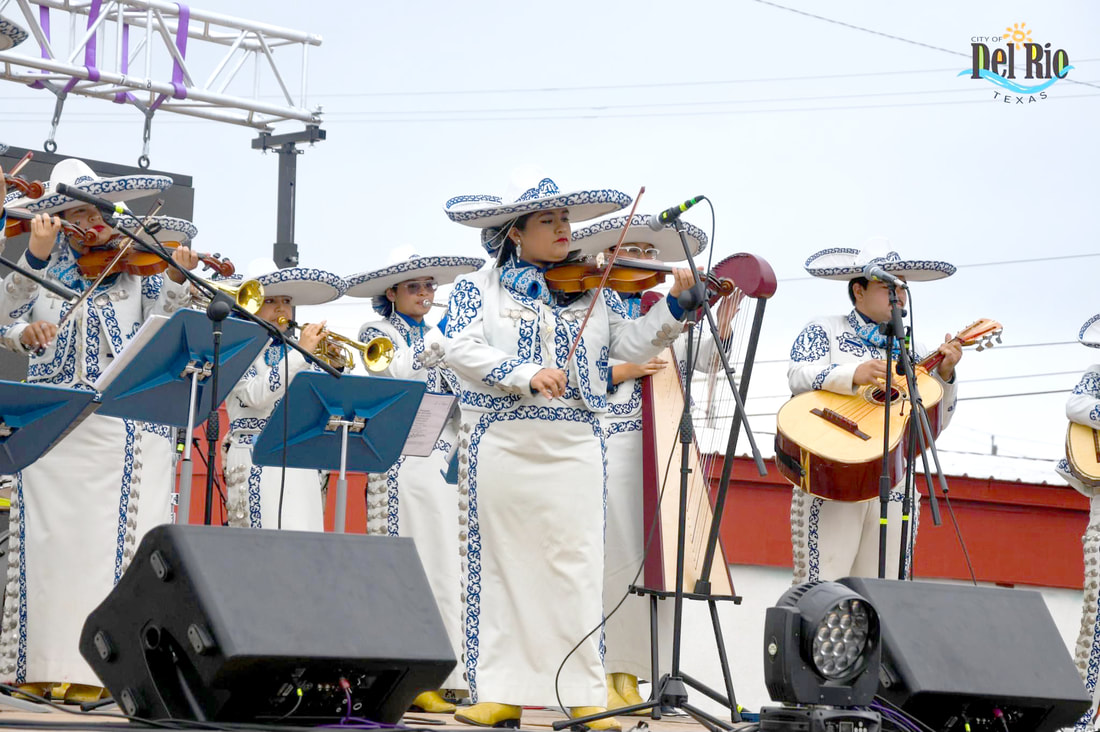
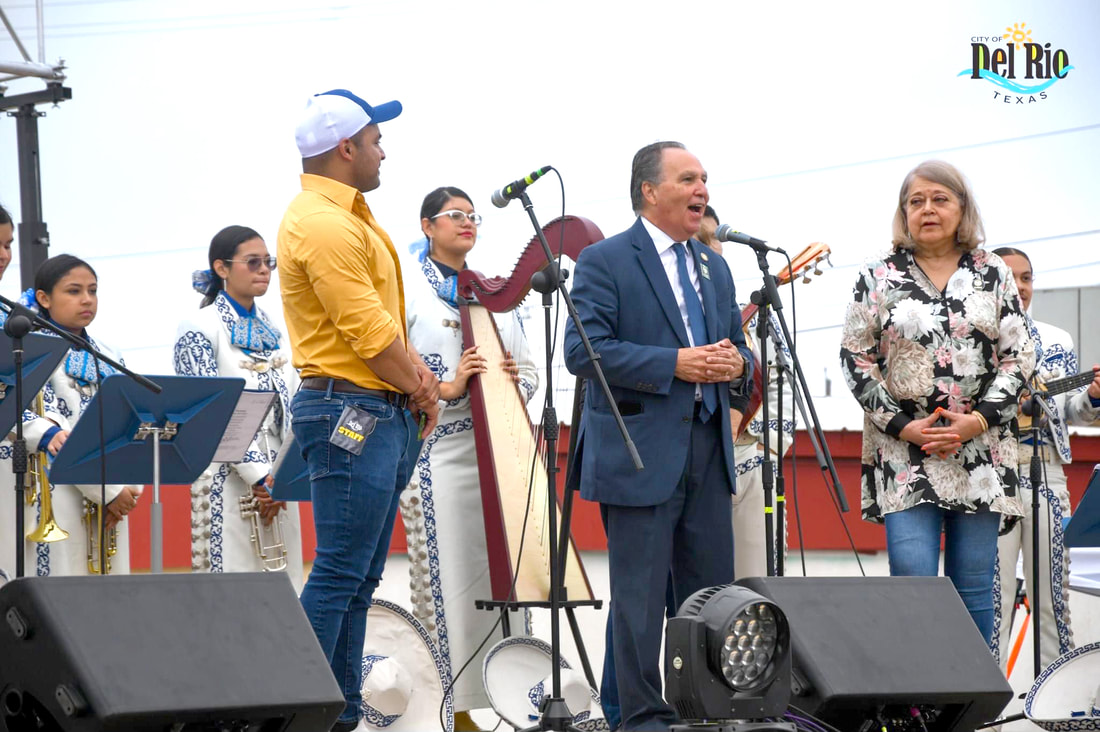
Leif Erikson was a Norse explorer from Iceland. His father, Eric The Red, had founded the first European settlement on what is now called Greenland in 980 A.D. Born in Iceland around 970 A.D., Erikson likely grew up in Greenland before sailing east to Norway when he was around 30 years of age. It was here that King Olaf I Tryggvason converted him to Christianity, and inspired him to spread the faith to Greenland’s pagan settlers. But shortly thereafter, Erikson instead arrived in America around 1000 A.D. To this day, many believe that Leif Erikson is actually the man who discovered America first. There are varying historical accounts of his discovery of America. One saga claims that Erikson sailed off course while he was returning to Greenland and happened upon North America by accident. But then there’s another saga about him stating that the discovery was intentional- and that he heard about it from another Icelandic trader who spotted it but never set foot on the shores. Intent on going there. Erikson assembled a crew of thirty five men and set sail. While these tales from the middle ages might appear to be mythical, archaeologists actually discovered tangible evidence supporting these sagas. Norwegian explorer Helge Ingstad found remains of a Viking settlement in L’Anse aux Meadows, Newfoundland in the 1960s- right where the Norse legend claimed Erikson had set up camp. Not only were the remains clearly of Norse origin, they were also dated back to Erikson’s lifetime thanks to radiocarbon analysis. And yet, many people still ask, “Did Christopher Columbus discover America?” While it appears Erikson had beat him, it was the Italians that accomplished something the Vikings could not: They opened a pathway from the Old World to the New. Conquest and colonization were quick to follow the 1492 discovery of America, with life on both sides of the Atlantic forever changing. Columbus returned to Spain and was greeted as a hero. After being instructed to continue his work, Columbus returned to the Western Hemisphere across three more voyages until the early 1500s. Throughout these expeditions, European settlers stole from the Indigenous people, abducting their wives, and seized them as captives to be taken to Spain. As the number of Spanish colonists increased, the Indigenous populations across the islands decreased. Countless Native people died from European diseases such as smallpox and measles, to which they had no immunity. Settlers often forced the islanders into forced labor in the fields. Those resisting were either killed or sent to Spain as slaves. Though Columbus is generally hailed as the man who discovered America, he was plagued with ship troubles during his final trip back to Spain and was marooned in Jamaica for a year before being rescued in 1504. Columbus died two years later still incorrectly believing that he’d found a new way to Asia. Perhaps this is why America itself was named after Columbus and instead was named after a Florentine explorer named Amerigo Vespucci. It was Vespucci who put forth the idea that Columbus landed on a different continent that was completely separate from Asia. Nonetheless, the Americas had been home to indigenous people for millennia before either of them had ever been born- with even other groups of Europeans preceding Columbus. #QUESTIONEVERYTHING Tx Tms: A big welcome to Ms. Dolores Martinez from the Brown Plaza Associatio. Ms. Dolores, tell me, I've seen through the course of this year lots of fundraising from Brown Plaza. You guys have been hard at work. How's it been going? Ms Martinez: It's been going okay. Just to let you know that the fundraisers that we've been doing is literally just for our Flambeau Parade, which is for our young ladies that we're taking to San Antonio, which are our queens. And not only our queens, but we have sister queens that we have invited, which is the Ms. Fourth of July Court and the Val Verde Pageant Court. And we've been working. We're still working at it. We have our last fundraiser coming up, which is at Buffalo Wings and Rims. And we also have we're going to be selling flowers at the Val Verde Pageant in order to complete everything that we're having to do. Tx Tms: Nice, and on the Cinco de Mayo activities, I see we're looking at three days of activities, fun for all of the family. Can you give us a little bit of details? Ms Martinez: Okay, on our Cinco de Mayo event, we already started with a middle school having an art contest. And we're going to be awarding the first prize, $125. And then the second and third will be getting artwork, art kits that they will be receiving also from the second and third prize. And then also we have a fantastic, because that is our theme, is a dress up contest or costume contest. And it's open to everybody, all ages. So you can come dressed as an Aztec and sign up at the office and you can be ready for the contest., and we also are going to give some first and second and third prizes. At that moment, we think we're going to give gift cards that they've been giving us to give away or a gift for the winners. And then also we have music, live music. We have a DJ coming in and we have live music from Assiso, Elvis Ayala, which is I believe they told me he was Ramona Ayala's nephew. And then we have Los Camaradas out of Boston and Lucero del Bravo from Los Nuevos Luceros del Bravo from here from Del Rio and also Los de Oro. We usually try to keep two of our local people to come and play besides out of towners. Then our Queen City Bells that will be performing. So we also have a ballet folklorico, my students, from Del Rio and then the guitarists from Del Rio. Also our sister city from Eagle Pass will be sending their folklorico dances. So there's a lot going on. Come out and enjoy the three day event, a lot of food booths, you know, and we'll be selling adult beverages there also at the plaza. So there's a little bit for everybody. Tx Tms: Oh yes, Ms. Dolores and great activities for the full family. We can't wait for the Cinco de Mayo activities. And for the people that don't know what Flambeau is, can you tell us what that Flambeau is? Ms Martinez: Okay, the Flambeau is a night parade that takes place in the main street of San Antonio. It's a night parade. It's an illuminated parade that is seen all over the nation and sometimes all over the world because it is a parade that is well known by everybody in the country. It's one of the biggest ones in the country. There's over 200 people coming out or cars, not cars, they're very strict in formation of the way. that we had to apply for our application to go through. But since we won last year, second place, they gave us a very good opportunity to be able to go back without hesitation. Tx Tms: Wow, so a very, very, very important parade, a very good way to promote Del Rio and everything that comes with it, let alone it is a televised event on San Antonio TV stations, so it will be seen throughout the San Antonio area going along to the border. So, Ms. Dolores, anything else that you would like to add to this? Ms Martinez: Okay, the parade will be, that one that we were talking about, the Flambeau parade will be on May the 3rd. So a lot of our vendors decided to say, hey, let me take my TV and they're going to be streaming at the plaza so they can be seeing the parade while it's going on here at the plaza. So you can be able to see us as we go by when KSAT 12 shows us on the parade just like last year. Tx Tms: Nice. Very, very good, Ms. Dolores. We believe you guys do a fantastic job at the Brown Plaza when it comes to Cinco de Mayo, 16, and now promoting Del Rio and the Queens at the Flambeau Parade in San Antonio. Thank you, Ms. Dolores. Tx Tms: I really appreciate it for letting us be with you and I greatly appreciate that. Help us out, come out and support us on whatever event we have for fundraising or just come out and enjoy the event on Cinco de Mayo. Con la finalidad de obtener apoyo por parte de las autoridades estatales para llevar a cabo obras de beneficio para los residentes del condado el comisionado Juan Carlos Vázquez realizó una visita al Capitolio. Esta visita se llevó a cabo por parte de representantes del condado y autoridades del municipio, ya que el propósito era el mismo de buscar apoyo para las diferentes obras que se tienen planeadas, para que esta Frontera siga creciendo y produciendo más fuentes de empleo. El comisionado Juan Carlos Vázquez del representante del Precinto 2, dio a conocer que durante esta reunión tuvo la oportunidad de reunirse con autoridades estatales, a quienes les presentó los proyectos que actualmente se están llevando a cabo, y los que se tienen planeados realizarse, los cuales habrán de hacer que esta Frontera crezca y pueda atraer más empresas. Durante esta visita, el comisionado Juan Carlos Vázquez se reunió con él Senador Pete Flores a quien le solicitó apoyo para todo el condado para los próximos proyectos que son desde complejo deportivos, mejoramiento de servicios primarios, pavimentación, entre otros. Asimismo, se reunió con el representante estatal Eddie Morales, con el mismo propósito de solicitar su apoyo en las propuestas que se han hecho al Estado para adquirir fondos para los proyectos en esta población. Durante esta visita al Capitolio, el representante estatal Eddie Morales firmó un documento en donde estaba reconociendo el 2 de abril, como Día del Condado de Val Verde en el Capitolio de Texas, haciendo de este evento oficial, tanto para el municipio como para el condado. El comisionado Juan Carlos Vazquez fue acompañado por el comisionado Kerr Wardlaw del Precinto 1, entre ambos estuvieron buscando el apoyo de las autoridades estatales, asimismo que se comprometieron a visitar esta Frontera para conocer los proyectos que se están realizando y los que se han planeado para hacer que esta Frontera crezca. Asimismo, a este viaje al Capitolio se tuvo la participación del Mayor Álvaro Arreola, y otras autoridades municipales, asimismo, representantes del centro médico regional del condado de Valverde, del distrito escolar consolidado de San Felipe, también la cámara de Comercio de Del Rio y el consejo internacional de la buena vecindad, todos se reunieron con diferentes autoridades estatales, solicitando su apoyo para distintas obras y proyectos que se tienen programados. El comisionado Juan Carlos Vázquez estuvo en representación del condado y estuvo solicitando el apoyo de autoridades estatales, no sólo para su precinto, sino para todo, Val Verde así mismo, se trataron algunos temas de interés común entre el condado y el municipio, quienes tienen que trabajar en coordinación para realizar algunas obras en beneficio a los residentes locales. Del Rio Leaders Unite in Austin: Advocate for Airline, Infrastructure, and Healthcare Needs
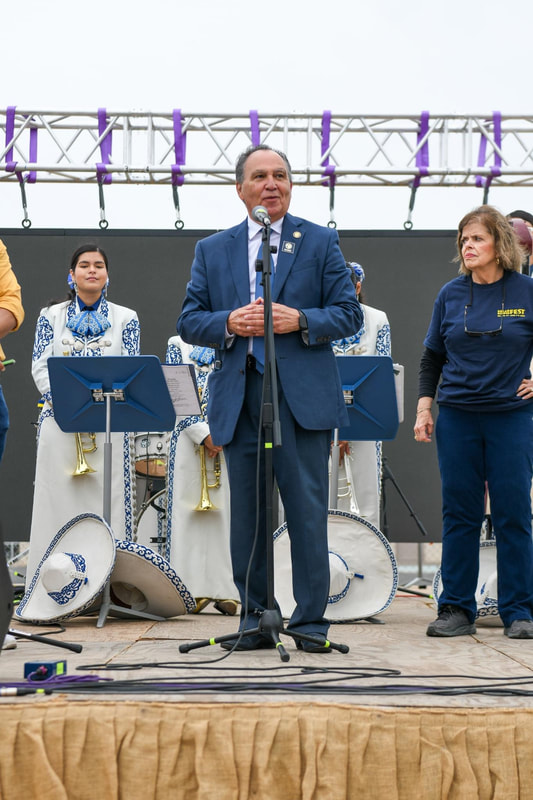
With vital airline service, infrastructure projects, and rural healthcare support topping the agenda, local officials met with state lawmakers to make the case for Del Rio's needs. Representatives for the city of Del Rio along with the hospital, our CEO Jorge Jurado, our superintendent of schools Dr. Rios, and a couple of commissioners, Commissioner Kerr Wardlaw, Commissioner Vasquez were all there. It was awesome, man. It was a great day. Tx Tms: Mayor, briefly we talked earlier, tell us the rundown, how was it? I know there's a lot of things that Del Rio needs. What were a couple of things that you, the people that you met with, officials, how was the day there? Mayor: We actually, you know what, man, it was an honor to be here this morning because Chief Parriman, Seminole's tribe, which is out of Del Rio, Bracket, Musquis, were presented with a proclamation this morning. And I was honored to go up to the floor. And that was a surprise for me too. And then we went ahead and started with our visits. I know Dr. Rios visited with the Chief Bernal, which is one of the actual lobbyists, or actually not lobbyists, he's the one that represents the educational part. That went well. For us, we went ahead and sat down with Eddie Morales and presented to him, our state representative, presented with actually with the thoughts that we presented in Washington was a wastewater treatment plant and our new well. Those are the two key components that we came to Austin to really support and get the support from them because those are the needs of our community. Along with that, we threw in the package of our airlines, which is another site that we wanted to kind of touch base with them. It went awesome. We went and visited the Roland Gutierrez. I know he only gave us a couple of minutes, but I know everybody's busy right now because the Senate and the House are passing bills left and right. And our Senator Roland went in and really supported one of the bills that's pushing forward that it's going to support the Val Verde County area too and the city of Del Rio, which is great. Tx Tms: Mayor, and you spoke about the airline. One misconception is that the airline was failing in Del Rio. That is not the truth. The airline was completely full. It was a success. It was just things that happened, a lack of pilots, Covid, but now that we don't have it, now we know that we need it more than ever. Mayor: Well, that is the actual truth. American Airlines was never suffering the last couple of years before they left us. There were shorter pilots, but they never came to the negotiation table to give us one or two flights a week. Their idea was to shut us completely down, and they did it. But this does not stop the city and the county and the hospital and everybody working together to get a second airline to come and do business with us. We're working on it. Two years ago when we went to Washington, we presented that package, and we continue fighting. This year, myself and Mrs. Burkhart went up there, and we got a surprise, but we can't cross our T's and dot all our I's until we finalize the contract. And that's something that my friend Jorge Jurado has been pushing because he needs specialists and doctors to stay in our hospital. And that's one of the key things that he's working with myself. And this is where I put to play something, Mr. Martinez. The city of Del Rio and the county, there's always rumors out there that we cannot work together. The school, the hospital, and the county, we're working together. There's only one difference of opinion, and that's on the second international bridge. The rest, we're all working for the progress of our community. And that's one of the key things. Tx Tms: Yes, that's very important. You hit it right there on point. There's so many things that we agree on, but everybody just loves to focus on that one thing. But there you guys do work together. And being Del Rio Days in Austin, this is the day where you see everybody out there. I know you said you have our CEO, George, Commissioner Vasquez, Commissioner Wardlaw, Dr. Rios there. So a lot of Del Rio out there right now communicating with everybody out there in the state capitol saying what we need in order so we can grow ourselves. Mayor: Hey, Javier, and remember one thing. What if the county commissioner Vasquez and Jorge Jurado just opened up within a partnership? And that is something that is going to continue growing. That partnership with the county is going to continue growing and bringing. And it's something that we're working. I'm constantly, you know, my heart is still with the hospital. I was there for five years. I loved it. I think there's a lot of potential. And this young man, Jorge Jurado, is going to push that hospital to be one of the best in the state of Texas. But we got to give them the tools. And that's something that we need to work. As a county, as a city, we need to support them. And put everything into play that without a hospital, we don't have a city. Because that's where we all end up. We're all going to end up somehow, somewhere there. And he's providing that services for us. Tx Tms: Next we spoke with our CEO of Alvaro Regional Medical Center, Mr. Jorge Jurado. George, good afternoon and thank you. And how's everything over there in Austin? Give us an update of everything that happened. Jurado: Yeah, good afternoon, Javier. It is going well. Like the mayor said, we're here supporting each other as a whole, right? We want to move our community forward. And we want to make sure that we're all supporting each other. But things are going well for the hospital, really advocating for our community, right? Advocating for resources, advocating for support. You know, health care is challenging and rural health care is even harder. So just asking for the help, the support we need to continue to move forward. We want to make sure that we bring additional service lines, additional positions, because we deserve that. Our community deserves that higher level of care. And with the support of everyone, we can move towards that. I'm very happy and very pleased with the effort and the support that our employees have at the hospital and our board of directors and all the leadership that's going right now. So I had a great meeting today with senators and representatives. So again, just supporting each other and trying to move our community forward. Tx Tms: Now, George, a couple of things that you might have pushed to these elected officials. What are some needs that you could let us know that you said, hey, this is what we need here in our rural and here in Del Rio, especially via VVRMC? Jurado: Yeah, one of the big things is the airlines, right? For us, recruitment and retention of our physicians and specialists is at the top priority. You know, we can't take care of people without the physician. So really advocating for that support is huge. The other is ensuring that our voices are heard. A lot of rural hospitals throughout the United States, unfortunately, have closed. And, you know, what would happen to our community if that happened to us? So we want to make sure that our hospital remains strong and healthy, that we make good financial decisions, but that we also advocate for resources. And, you know, labor and delivery is one of those things that some hospitals in other areas are losing. We can't afford that. We deliver 800 to 900 babies a year. So we want to make sure that we advocate and that we are knocking on doors and talking to the right people because that's important to us. And like the mayor said, without a hospital, that is critical infrastructure to any community. So it's really nice to see everyone working together. And again, you know, being born and raised in Del Rio, Val Verde County, it's a lot of pride that goes into, you know, representing and making sure that we move our community forward. Tx Tms: Now, George, you spoke about the airline and how important it is for doctors because, you know, doctors, you know, you're trying to sell the city. Why is Del Rio? You need to move down. And it is one of the most critical things that we have is an airline to make Del Rio attractive so we could get these doctors. A lot of people say like, oh, why do we need to an airline? These are things that bring good doctors when you're trying to bring them into Del Rio. So, you know, a lot of people don't see that side. And I'm glad you brought that up. Jurado: Yeah, quality of life is one of the, you know, the biggest attractants to anyone, any professional, whether it be in the maquila industry, it be in health care. You know, quality of life is something that Del Rio can offer because it's a slower pace. You get to spend time with your family. You know, if we have an airline that only makes that even nicer, you know, you can get away quickly. Go, you know, go check on your family out of state or out of the city and then come back and take care of the community. So definitely we're hoping that that moves forward. And we know that our recruitment efforts will be that much stronger if we're able to do that. The Central Intelligence Agency sure can come up with some strange and off-the-wall spy techniques. Here’s an operation that you might not believe. In the 1960s, the CIA’s Directorate of Science and Technology embarked on an ambitious project known as Operation Acoustic Kitty. The goal was to create a unique type of spy: a cat equipped with sophisticated surveillance equipment. The idea behind this unconventional approach was to leverage the innocuous nature of cats to gather intelligence in situations where human spies would be conspicuous. The CIA believed that cats, with their ability to roam freely and blend into various environments, could be the perfect covert operatives. To bring this vision to life, the agency subjected cats to surgical procedures, implanting miniaturized listening devices in their bodies. The aim was to train these feline spies to sit near foreign officials, secretly transmitting their private conversations to CIA operatives. Operation Acoustic Kitty was a project that pushed the boundaries of espionage technology. The cats underwent extensive modifications, basically transforming them into cyborg-like creatures. Microphones were implanted in their ears, while radio transmitters and antennas were skillfully woven into their fur. The CIA’s team of scientists and engineers worked tirelessly to ensure that these spy cats would be capable of carrying out their surveillance missions without drawing suspicion. The concept of using animals for espionage was not entirely new. However, Operation Acoustic Kitty took this idea to a new level by combining advanced technology with the natural ability of cats. The project was a testament to the CIA’s willingness to explore unconventional methods to gain a strategic advantage during the Cold War era. Despite the ambitious nature of Operation Acoustic Kitty, the project faced numerous challenges. Have you ever tried training a cat? Training cats to behave as reliable spies proved to be a daunting task, as their independent nature and unpredictable behavior made them difficult to control. Additionally, the surgical procedures and integration of surveillance equipment posed significant risks to the well-being of the feline operatives. The CIA’s ambitious Acoustic Kitty project aimed to use a specially trained cat to eavesdrop on conversations near the Soviet embassy in Washington D.C. The first mission was to take place in a park outside the embassy, where the spy cat would capture a discussion between two men. With high hopes, the CIA agents released the cat near the target location. However, the mission took a disastrous turn almost immediately. According to some reports, the unfortunate feline was struck down by a passing taxi moments after being released by his handlers. Despite the CIA’s effort to train the cat to sit near the target and record conversations, the first Acoustic Kitty project ended in complete failure. The project's abrupt end highlighted the challenge of using animals, particularly cats, in espionage operations. Despite the agency’s belief in their ability to train cats for espionage purposes, the project was cancelled in 1967 after being deemed impractical for real world use. But don’t worry about the cats anymore. The CIA is using more robotic animals now such as the robotic fish like Catfish Charlie. Never underestimate the ability of our spy agencies or any agency for that matter. They will go to extreme lengths to gather information. #QUESTIONEVERYTHING In school as kids, kids everywhere had to take some form of science class. In most cases, it was Biology, a branch of science that deals with living organisms, including but not limited to ecology, evolution, genetics, microbiology, physiology, and zoology. Remember dissecting the frogs? But in recent decades, we’ve come to hear the term Cryptozoology. What is that, you ask? Cryptozoology is the study of animals whose existence has not been confirmed by the larger scientific community. It is considered a pseudoscience and subculture that searches for and studies unknown, legendary, or extinct animals whose present existence is disputed or unsubstantiated. The study of cryptozoology came to be through the work of Ivan T. Sanderson, a Scottish botanist and zoologist educated at prestigious Cambridge in the United Kingdom. After working in counter-espionage for the British Naval Intelligence during World War II, he began to focus on his academic pursuits. Sanderson used the media to bring information about the natural sciences to a wider audience. In the late 1940s, he began making regular appearances on radio and television programs in New York lecturing on zoology and animal life. In the 1950s, Sanderson became increasingly interested in the study of the unexplained, including ufology and cryptozoology. Sanderson founded the Society for the Investigation of the Unexplained (SITU) to look into such topics as UFOs, the Loch Ness Monster, Sasquatch, the Bermuda Triangle and other cryptids. Sanderson was also an author on the various subjects mentioned, including “Invisible Residents: The Reality of Underwater UFOs”; “Pursuing the Unexplained: Puzzling Mysteries of the Natural World”; “Abominable Snowmen: Legend Come to Life” to name a few. Although Sanderson died in February 1973 of brain cancer in New Jersey at the age of 62, the study of Cryptozoology continues. Although Cryptozoology is not regarded as a true science, college training in biology, zoology, or a related field can be helpful for individuals considering this career path as a degree is not needed. You may be wondering who the heck would hire a cryptozoologist. Well, the answer is museums and research centers that focus on the study of natural history, anthropology, or folklore. Just so you know, a cryptozoologist salary, as of 2021, was $64,724.00 with a high of $120k in San Jose, California. Maybe, just maybe, we’ll find out more about these cryptids like the Dover Demon in Massachusetts; the Lizard Man of Scrape Ore Swamp in South Carolina; or even the Mongolian Death Worm of the Gobi Desert (Remember the movie Tremors?) #QUESTIONEVERYTHING . |
KWMC
|


RSS Feed